Dinnertime with Teens: a Poem

Table for oneAn hour or so ago,

the family was here.

We ate and talked of school and politics, movies and summer plans.

Someone told a joke. Someone laughed. Someone got mad.

Everyone loaded the dishwasher.


It was the type of dinner I imagined

back when mealtime meant

sippy cups, peas thrown from highchairs,

and cut-off sandwich crusts.


They’ve scattered now.

Someone’s reading, someone’s biking, someone’s online.

Alone in the kitchen, I sponge the table and try not to think about the future,

when family dinner will be a thing for holidays, at best.

Posted in parenting, poem, poetry, writing | Tagged , , , , , , | 8 Comments

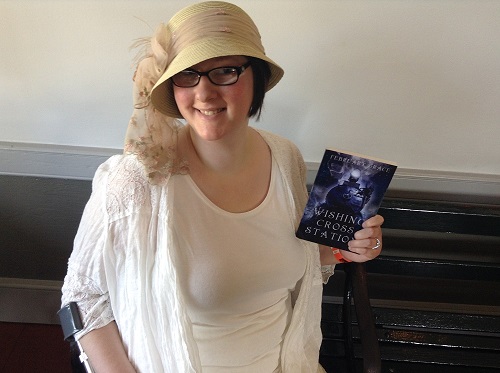
Meet Writer February Grace and her New Book, WISHING CROSS STATION

February_WCSHappy Wednesday, blog readers. Today, my guest is the wonderful and talented author February Grace, who recently released a brand new book. So without further ado, let’s get started!

MR: Hi February! I’m so happy to have you on the blog again. Thank you for stopping by. A while back you contributed a great post to my Music Tuesday series, and now you’ve got a new book out that I’d love to discuss. First of all, it’s called Wishing Cross Station. Can you tell my readers a little bit about the story?

FG: Of course! Thank you so much for inviting me to visit again, I truly appreciate it.

WISHING CROSS STATION COVER HIGH RES FULL FINAL - smallWishing Cross Station is a bittersweet fantasy tale of trains and time travel. Our young hero, a page at his college library, is sent to pick up a private donation of books. He has no idea where one of those books will take him, or what it will take from him.

He ends up retracing a powerful man’s footsteps into the past, and caught in the same dangerous trap; falling in love with a woman he was never meant to know, and unsure he will ever find his way home.

MR: Who would you say your intended audience is: young adults or regular old adults? Or is Wishing Cross Station the type of book that can be enjoyed by people of all ages?

FG: LOL Regular Old Adults… I like that, and I think I qualify as one of those! You should definitely make that a standard genre name!

I’d say this book is intended more for a New Adult or just adult audience, though I can imagine some YA readers finding it a worthwhile read as well. It all depends upon the individual interests of the reader in this case, I think, more than the reader’s age. I consider the ‘rating’ to be PG-13.

MR: I’ve only just begun to read Wishing Cross Station, but one sentence from its blurb really intrigues me:

When nineteen-year-old college library page Keigan Wainwright is sent to pick up a private donation of books for the school’s collection, he has no idea where one of those books will take him, or what it will take from him.

Of course, I’m not asking you to give away any spoilers, but I get the sense that Keigan’s life may end up intertwined with the life of a character from the donated book. Do you want to discuss that?

FG: Not a character from the donated book, because the donated book is not a work of fiction. I don’t want to give too much away, but Keigan’s life does end up entwined with that of someone who possessed the book in the past. Even though he’s never met them, he finds himself getting to know them quite well through the contents of the book. I think that’s about all I can say without spoilers.

MR: So Wishing Cross Station is classified as a “bittersweet fantasy romance.” I know there’s been a lot of debate recently in the romance writers’ community about the way romance novels end. Some people say there MUST be a “happily ever after” ending, while others say the ending can be more ambiguous. What’s your opinion on this topic?

FG: I personally think each story needs whatever ending the rest of the book (and/or its characters) dictate. I think the ending has to make sense with the overall story.

Wishing Cross Station is primarily a fantasy novel (though romance is a huge part of it) so I don’t believe it falls under the ‘rules’ of the Romance genre.

I know there is a market that expects only HEAs and there’s nothing wrong with that. If you want to write for that market, or buy only those sorts of books, go for it.

Since I don’t consider myself a dedicated-to-the-classic-genre romance writer, I don’t feel bound by the restrictions some would place on it. I write what my heart tells me to write. Some of my books have HEAs. I won’t spoil whether or not WCS is one of them. But the word ‘bittersweet’ should say a lot to those only looking for a tried and true Happily Ever After.

MR: A week or so ago, you posted on your blog that you won’t publish any more novels after WCS. But I know you well enough to know that you won’t stop creating things in one form or another. So what’s next on the horizon for February Grace?

FG: Thank you, you are very kind. I am focusing right now on taking care of my health, and trying to get my mind and body back into some sort of functioning harmony.

I am also dabbling with flash fiction and poetry as I am inspired to do so and I will likely post some of those little things under a new project I’ve started at Wattpad called Wishful.

It’s meant to be ongoing, eclectic, and could include everything from artwork to six word stories or longer short stories and flash fiction. It’s my hope it’ll be a place where I can still share some things with readers yet keep my focus on my health where it has to be.

I am so grateful to my publisher, Booktrope, for the five novels we’ve published together in the past two years. I am grateful to the wonderful team of people who helped make those books a reality. I’m so grateful, to so many, for reasons that I can’t even begin to explain.

MR: Finally, the opening paragraph of WCS employs some really stunning language, and the minute I read it, I knew I’d want to read the entire book. Would you allow me to share that paragraph with my blog readers?

FG: Of course! I’d be honored if you did. In fact, I’d be happy to share most of the first page if you’d allow me. Thank you for the opportunity to share… here it is:

~*~

The wail and cry of the whistle. The puff of the engine. The clang of the bell and grinding screech of the brakes… all combined with the roar of a biting winter wind.
No matter how old I live to be, I will never forget that particular cacophony, an orchestra tuning up in preparation for a command performance. When I heard her approach, I knew the journey I was about to take would change me— no matter where I ended up when it was over.
She was beautiful, dark, and strong, with powerful legs beneath her as she rode the rails into the station. Plumes of white and grey rose around her as she moved, fluttering like angel’s wings. The smell of the smoke was a singular aroma. Coal, fire, and heat all combined to intoxicate a man, to loosen the ideas in his head from solid form into threads meant to be spun into the foolishness of dreams.
She was a vixen, a siren, a savior, and damnation all in one. All things that beckon men to follow her anywhere, do anything to finally reach ecstasy before demise.
She was one of a kind, this engine, and her name was Aurelia Belle.

~*~

You can find out more about February Grace by visiting her at: http://www.februarywriter.blogspot.com or chatting with her on Twitter @februarygrace

Posted in books, interviews, Uncategorized, writing | Tagged , , , , , , , , | Leave a comment

Is ORANGE IS THE NEW BLACK Today’s M*A*S*H?

mash is the new blackThe other day, I saw a picture of Uzo Aduba in the newspaper and immediately thought Crazy Eyes, the name of the character she plays on Orange is the New Black. In my pre-coffee haze, I tried to recall Crazy Eyes’ full name on the show (it’s Suzanne Warren), but couldn’t think of it for a few minutes, and then, for some reason, the name Hot Lips Houlihan popped into my head.

Now if you’re not at least forty, then Hot Lips (Margaret) Houlihan probably won’t mean much to you. But if you do remember Hot Lips, then you know she was a character on the TV show M*A*S*H, which ran from 1972-1983.

And as the coffee brewed, it began to occur to me that M*A*S*H and OITNB have more than a little in common. Not only do they both feature compelling characters with nicknames referencing facial characteristics (Crazy Eyes and Hot Lips) and low-budget costumes (how much can those prison jumpsuits and military fatigues cost?) but both are also about large groups of people stuck in places they don’t want to be.

More importantly, though, both programs expose social injustices, dark truths, and misconceptions about elements of society that many of us haven’t experienced personally. With M*A*S*H, the setting was the Korean War (or Conflict, if you want to be technical), but when the show first came on the air, America’s involvement Korea had ended, and we were dealing with the ugliness, tragedy, and confusion that was Vietnam. Therefore, most viewers saw M*A*S*H as making a statement–an effective statement–against all war, particularly wars in which the reasons for America’s involvement is somewhat unclear.

With OITNB, the setting is a woman’s federal prison called Litchfield Penitentiary. And although I don’t think any of the women in that particular prison are there unjustly (as in I’m not aware of any being falsely convicted) the frequent flashbacks into their pre-jail lives expose the sad, dysfunctional, often dangerous conditions and situations that prompted them to do illegal things. Watching that show, I feel almost the same way I do about the characters on M*A*S*H: they’re trapped and don’t deserve to be.

And yet, both shows embrace the lighter sides of bad situations. M*A*S*H started out as a dark comedy—with an annoying laugh track to boot—but over the course of its eleven seasons, became increasingly dramatic. Meanwhile, despite the fact that OITNB feels more dramatic most of the time, there are plenty of humorous moments as well. In my opinion, the biggest factor in viewers’ perception of the two shows’ genres is the way the pilot episodes roll out. With M*A*S*H, we’re introduced to Hawkeye and Trapper John, a couple of fun-loving doctors who just happen to be working in one of the worst places possible. Whereas OITNB begins with happy, “normal,” somewhat materialistic New Yorker Piper Kerman learning that she’s about to be incarcerated for a crime she committed nearly ten years earlier. And when Piper enters the prison, there are no sincere laughs—only jeers from the other inmates, all of whom put their worst faces forward. So what’s a viewer to do? We prepare for a journey into hell.

It’s a pleasant surprise, then, to find—in subsequent episodes—that most of the inmates are considerably kinder than they initially appear. Much of the tension, in fact, ultimately comes from the administration: the very people who are supposed to be taking care of the prisoners. Not all of it, of course, as there’s plenty of tension among the inmates as well, but at the occasional party and in true crisis situations, we realize that most of them share a common bond, while the majority of the people running the prison have very deep-seated problems. Sometimes, while watching the show, I’m reminded of One Flew Over the Cuckoo’s Nest.

Of course, in any comparison of the two programs, gender must be discussed. On M*A*S*H, all the soldiers are male, while women portray nurses, girlfriends, wives, and mothers. Such a thing would never be tolerated today, but during the Korean War, that’s the way it was in the military. Not to mention that the show was produced in the seventies. Still, I believe that the character of Major Margaret “Hot Lips” Houlihan—the head nurse—is well-developed, and I love how the show’s producers allow her to grow from an object of ridicule in the first few seasons into a more sympathetic—if flawed—human being, who does her best to deal with her demons and shortcomings (she has a drinking problem and can be short-tempered and nasty to her staff). As the series progresses, we see Margaret becoming a kinder person, and she is eventually strong enough to divorce her husband when she catches him cheating on her. Professionally, she’s also top-notch, and although the doctors like Hawkeye often make sexist comments about her and treat her in demeaning ways (again, it was the seventies), Margaret is always respected in the operating room, and makes it clear that she wouldn’t tolerate anything less. I can’t imagine anyone other than the brilliant Loretta Swit playing Margaret, and, as a teenager who watched the show on a regular basis, she became a feminist role model for me.

As I imagine many of the women on OITNB are role models for the teenagers who watch that program. Feminism really has come a long way since the seventies, and I’m so glad our kids can turn on the TV and see smart, funny, likeable characters, who just happen to be lesbian, bisexual, transgender, and/or questioning their sexuality. Apparently, M*A*S*H tried to address homosexuality with Jamie Farr’s Corporal Klinger character—according to Wikipedia, when the show began, Klinger was supposed to be a gay man—but then he morphed into a guy who cross-dressed because he wanted a Section 8 discharge, and eventually married a woman. Oh well. For the third time, it was the seventies. The show’s creators were trying to open up about sexuality, but the general public wasn’t necessarily able to accept gays on TV, and I’ll bet some advertisers weren’t thrilled with the idea either.

There are plenty of other similarities between the programs. Both have killed off major characters—and it should be noted that M*A*S*H was one of the first TV shows to do that, with the shocking death of Lt. Colonel Henry Blake—and both have allowed minor and recurring characters to grow into main cast members.

In the end, though, I believe the reason both shows are so beloved is because the quality of the writing is so high. Yes, both are set in hostile environments, but once we get past the bars of Litchfield Prison and the horrors of the Korean war, we find regular human beings doing their best to get through each day with dignity, love, friendship, and perhaps a laugh or two. Dramatic, violent things happen on almost every episode of each show, but despite the fact that there’s plenty of drama and violence on TV, most other programs never come close to the ratings achieved by M*A*S*H and OITNB. Why? Because that’s not what viewers tune in for. Viewers love M*A*S*H and OITNB because of the connections the characters make with each other, and therefore with their audience: the friendships, the jokes, the love affairs that we all instinctively know can’t last very long because of the circumstances under which they begin.

Then there’s the fact that the creators and writers of these programs have given us characters so real—and such great dialogue—that for many of us (or me anyway) it’s sometimes hard to believe we’re watching actors playing roles. The shows suck us into their worlds so well that when I saw Taylor Schilling in another movie, I found it quite jarring. For the briefest second, I was unable to accept her as anything other than a prisoner.

Even stranger was learning that Loretta Swit wanted to get out of her M*A*S*H contract several years before the show ended, but the producers wouldn’t release her. What? Hot Lips couldn’t leave the 4077th! She was the head nurse; she was necessary! And did you know that Gary Burghoff—who played Radar on M*A*S*H left the show at the beginning of its eighth season so he could spend more time with his family? Yes, Radar was a dad. Even now, I find that somewhat shocking, but again, that’s because the writing on the show is so good.

So what do you think? Do you agree that M*A*S*H and OITNB are cut from similar cloth, or do I have it all wrong? I’d also be interested in hearing what TV shows you feel are particularly well written. Thanks for reading!

Posted in television, writing | Tagged , , , , , , , | 4 Comments

Pets, Loss, Sad Old Movie Characters, and Pesky Kids

sherlock

Sherlock

A little black and white cat is hopping around my living room, knocking things off the mantle and quietly testing the dog’s patience with his innocent, precocious behavior. He’s adorable, cuddly, and amusing. I should be smiling.

But my heart aches every time he does something cute, and my eyes keep filling up with tears. You see, this new kitty—named Sherlock by my daughter—wasn’t supposed to be the only cat in the house. We got him a few weeks ago to be a buddy for our other cat, Jack. But Jack’s gone now, and I’m feeling a bit like one of those elderly people in the movies—you know, like Clint Eastwood in Gran Torino, or the animated guy voiced by Ed Asner in Up—who’ve suffered a loss and just want to be left alone with their grief. But then some pesky new kid comes into their life and demands their attention.

MAC

Mac

Let me back up a bit. Last June, my family was lucky enough to share our home with two great cats named Mac and Jack, plus a dog named Spencer. As a lifelong animal lover, I couldn’t have asked for much more. The cats were BFFs, and the dog kept his distance from both of them, primarily because of Mac’s ability to terrify him with little more than a glare. Unfortunately, Mac was also fairly advanced in age, and last August—a month short of his seventeenth birthday, he passed away.

Mac’s death was, of course, a huge loss for the humans in our family, but he’d suffered from heart disease, and nobody could say he hadn’t had a good run. Poor Jack, however, didn’t understand. For weeks and weeks, he’d wake up each morning, howling for his missing friend. We gave him as much love as we could, and mercifully, Spencer never tried to hurt him, despite the absence of his bodyguard. But we knew he’d eventually need a new pal.

It took a while for us to feel ready—both mentally and physically—to bring a new cat into the house. Finally, at the end of May, my kids and I drove to our favorite animal shelter and adopted Sherlock. Like Mac, Sherlock seemed bold and unafraid—we wanted a cat who could wouldn’t take any crap from Spencer—but also sweet and affectionate, for Jack’s sake.

As the shelter advised, we kept Sherlock in my daughter’s room with his own food, water and litter box for over a week, then slowly began to introduce him to the other animals. And things were going fairly well. The dog quickly learned to keep a healthy distance from Sherlock’s claws, and although Sherlock and Jack had a couple of hissing matches, they soon began to tolerate each other. Once again, we were a two-cat, one dog household. I was looking forward to a summer with three happy animals.

Jack

Our sweet Jack

But this past Monday, I noticed that Jack’s stomach looked distended, almost as though he was a few months pregnant. And we’d all been commenting on how he hadn’t been eating much since Sherlock’s arrival, but had written that off to anxiety over having a new feline in the house. Then, on Tuesday, Jack’s belly was even bigger, and he refused to eat anything at all. On Tuesday evening, I called the vet. My hope was that he had some sort of blockage that could be cured with simple surgery or medicine. I’d also searched Google for illnesses that might cause an eleven-year-old cat’s belly to bloat, and learned about some awful ones, but did my best not to think about those possibilities. After all, Jack had been acting perfectly normal until very recently. Besides everyone knows you’re not supposed to Google medical stuff.

But the next morning, after our vet examined him and did some testing, we learned that he had an aggressive form of lymphatic cancer. In other words, he was terminally ill. It was a shock, to say the least. Treatment would be expensive, stressful for him, and most likely unsuccessful. What did I want to do?

I spent about an hour in the office, weighing the possibilities, talking to my husband on the phone, and listening to the vet’s advice. And crying a lot, of course. Because it was quickly becoming evident that the only humane choice was to have him put down. He wasn’t going to get better and he wasn’t eating. Bringing him home would only lead to more suffering.

Spencer_on_couch

Spencer

Our family is now in a bit of a fog. The kids both have vivid memories of the first day Jack came to live with us; it seems like only a few years ago that we all fell in love with the tiny black furball with one yellow eye. (The people at the animal shelter where we got him told us he’d been found in an alleyway with an eye infection so severe that doctors hadn’t been able to cure it, so eventually it’d been removed.) How can he be…gone? Especially now, when we just adopted a new friend for him? Even the dog is confused and acting depressed.

And then there’s Sherlock. He never had a chance to bond with Jack, so for him, things are pretty much all good. He’s free of the animal shelter and happy to be in his forever home.

It’s so strange, and my feelings are all over the place. Obviously, if we’d known how sick Jack was, we wouldn’t have gotten a new cat in May; we would’ve focused our attention on Jack, grieved his death for a while, and then perhaps gotten a new cat—or two new cats—when we were ready.

But here we are with a feisty, one-year-old kitty who refuses to be ignored. He’s in our faces, literally, and in our beds at night. He tries to hop up on the table when we eat dinner. And right now, he’s fallen asleep behind me on the couch. I reach around to pet him, and he purrs. Once again, I cry for Jack, but I can’t help but love this new creature too.

In all the “grieving old person” movies I’ve seen, the pesky kid eventually wins over the sad adult’s heart. In fact, the pesky kid’s presence usually helps the adult to see the brighter side of life and move on. And I’m thinking little Sherlock will help our family do that. But we’ve still got a bunch of tears to shed. Fortunately, both Spencer and Sherlock like hugs and don’t mind us crying into their fur.

Posted in animals, life, life experiences, Uncategorized | Tagged , , , , , , , , , | 6 Comments

Featured Author: Cait Reynolds

cait reynolds What’s on your reading list for summer? Don’t have that all sorted out yet?

Well, if you, or someone you care about likes contemporary YA and Greek mythology too, I’ve got a recommendation for you: DOWNCAST, by Cait Reynolds.

In fact, if your only complaint about Greek mythology is that the characters aren’t always easy to understand, you’re in for a special treat. Because Cait Reynolds has skillfully adapted the story of Persephone and Hades into a very relatable, modern high school story packed with fully alive, fleshed-out characters.

Here’s a little more info about the book: What would you do when faced with an impossible truth? DOWNCAST by Cait Reynolds is ripe with twists you never saw coming and love that defies the odds in this intense new Paranormal Romance retelling one of mythology’s greatest love stories.

It’s the start of Stephanie Starr’s senior year of high school, but sadly, this is no life of the prom queen. Stuck at the bottom of the high school social totem pole, Stephanie is forced by her domineering mother to wear lumpy linen dresses and eat organic tofu for lunch in a world of mini-skirts and pizza.

What Stephanie doesn’t anticipate is gorgeous and cocky Haley Smith who breaks social convention and pursues her with a determination that is both terrifying and flattering. Afraid that Haley is simply trying to set her up for massive humiliation, Stephanie does her best to push him away. But the more attention he pays to her, the more she runs, and the more everyone else begins to notice.

Instead of a loving family to support her as the mean girls make their play, Stephanie’s mother begins to unravel mentally, her possessiveness of Stephanie spiraling to new and frightening extremes. Stephanie is forced to grow up, find herself, and learn the truth about her past in order to save her mother, her friends, and her town. When the truth is revealed, nothing can prepare her for the outrageous reality of her existence…and nothing can save her from her fate.

Except Haley.

And here’s Cait’s official bio:: Cait Reynolds lives in Boston area with her husband and 4-legged fur child. She discovered her passion for writing early and has bugged her family and friends with it ever since. When she isn’t cooking delicious meals, running around the city, rock climbing like a boss, or enjoying the rooftop deck that brings her closer to the stars, she writes. Reynolds is able to pull from real life experiences such as her kidney transplant, and her writing reflects her passion for life from having to face the darkest places and find the will to laugh.

Intrigued? You can pick up a copy of DOWNCAST here on Amazon or here on Barnes and Noble.com

Looking for Cait? You can find her website here.

Cait is also on Twitter and Goodreads, so go ahead and follow her, or post a review of Downcast after you’ve read it. My guess is that you’ll love it.

Oh, and they say you shouldn’t judge a book by its cover, but this is so beautiful, and what’s inside is even better. downcast cover large

Finally, I’ll leave you with an excerpt. If you’ve ever been to high school–or plan to go there–this scene should ring very true to you.

Excerpt from Downcast

I picked at my lunch, using my fork to rake and pile quinoa like one of those toy zen sandboxes. I had just completed what I thought was a pretty awesome replica of Machu Pichu when Helen slammed herself down in the chair opposite me and huffed.
Morris and I exchanged raised eyebrows.
“Steph, I know I’m driving you home from school,” Helen ground out. “But, do you mind if I commit murder? You can probably bail me out by the end of the day.”
“Fine with me,” I shrugged, turning Machu Pichu into the Grand Canyon. “Go ahead. Who you gonna kill?”
“Zack Smith.”
Morris laughed.
“Why?” I asked.
“So, we’re in Biology, right?” Helen began, sounding deeply aggrieved. “And, I ask the boy if he finished his part of the assignment for chemistry lab tomorrow. What do you think he says?”
“Um…”
“Exactly! He then has the balls to tell me he has been busy with football practice because of Homecoming on Friday, and that he might not get to it!”
“I can help you,” Morris offered from behind his laptop screen.
“No way,” Helen huffed. “That boy is going to do his fair share of the work! He might be able to cheat and charm his way through all the other classes by getting the girls to cover for him, but there’s no way I’m going to let him do that with me!”
“But, what about your grade?” I asked.
“I can always do extra credit,” Helen sniffed disdainfully. “Mr. Ingalls knows I am a serious student. He won’t punish me for a helmet-wearing Neanderthal’s slacking.”
“Dude!” Morris exclaimed. “Harsh!”
“Seriously?” Helen continued, waving her Hot Pocket menacingly. “For some reason, he has decided it’s his goal in life to irritate the crap out of me, and it’s only getting worse.”
“Maybe he likes you?” Morris suggested.
“Don’t be a dumbass,” Helen snorted, giving Morris him her Your Data Is Incorrect look that he never saw because he never looked up from his screen.
Helen morosely went back to eating and probably contemplating some kind of staggering homicidal scheme for Zack.
A thought struck me, and I looked up from my attempt at a quinoa-based Mount Rushmore.
“Helen,” I asked. “Does Zack ever talk about Haley?”
Helen’s eyebrows shot up, and I could practically see the hard drive in her head whirring to life.
“Not really,” she replied, then paused. “Actually, I take that back. He doesn’t talk a lot about Haley, but he does mention him sometimes. He always sounds a little sad when he talks about him.”
“Sad?” I seized on this. “Why?”
Helen frowned thoughtfully before replying, “He seems very protective of him. He said that Haley has always been a loner.”
“Has he ever mentioned him going away?”
“Uh, no? I mean, what do you mean ‘going away?'”
“I don’t know. It’s just something Haley said, like he wouldn’t be around here for long.”
Helen bit the tip of her thumb, her tiny white teeth slightly visible through her parted lips. This was her pose of Intense Puzzlement.
“They seem to have moved around a lot before coming to Darbyfield,” she said finally. “Maybe he’s just anticipating having to leave before the year is over?”
I nodded, somewhat relieved. Obviously, that’s what he had meant. He didn’t want to move again during his senior year. Who would?
“Well,” Morris jumped in. “They can’t move before the end of November, not with Zack being quarterback of the football team.”
Helen rolled her eyes, and I laughed.

Posted in book reviews, books | Tagged , , , , , | Leave a comment

Mercury Retrograde and Darrell Martinie (the Cosmic Muffin)

stars_image by Axel Antas-Bergkvist

Image by Axel Antas-Bergkvist


Let me start by saying that I know next to nothing about astrology. And by next to nothing, I mean as close to nothing as a person can get. In fact, the only thing I know about astrology is a little bit about the phenomenon known as Mercury retrograde.

Like many people in the Boston area, I first learned about the dreaded Mercury retrograde from the late, great Darrell Martinie, who was dubbed the “Cosmic Muffin” by another iconic Boston radio personality, Charles Laquidara.

As a teenager, getting dressed for high school each morning, I’d tune into WBCN, and would always enjoy Mr. Martinie’s astrological “weather reports.” They were much more interesting and complex than the typical astrology stuff you’d see in the newspaper, because Martinie wouldn’t just focus on the twelve sun signs. Instead, he’d talk about the movements of the sun, the moon, the starts, the various planets, and all other kinds of other celestial stuff. Then he’d give some concrete advice about getting through the day in the best way possible.

He was funny too, and kind, and that’s why I liked listening to him so much. But when it came to following his advice? Well, normally I wouldn’t, because I was a kid, and what kid listens to advice? Besides, the Cosmic Muffin believed that people’s lives are shaped—almost predestined—by the position of various heavenly bodies at the moment of their birth. Whereas I’m a pretty strong proponent of free will. Therefore, I don’t put too much stock in astrology.

But then there were those days when the Cosmic Muffin would talk about Mercury retrograde, and I’d pay much more attention. Because Mercury retrograde felt—and still feels—very real to me. If you don’t know what it is, it’s a crazy thing that happens about three times a year, when the planet Mercury appears to be moving backwards. And, since Mercury is apparently the planet that rules all communication: talking, listening, learning, writing, editing, buying, selling, and all kinds of other stuff (travel is somehow grouped in there too), people are advised not to do anything important in those areas during periods when Mercury is retrograde.

Yikes. That’s kind of tricky, especially if you’re a writer. For example, Mercury is retrograde right now, and here I am writing. Not that this is a particularly important blog post, but I’d hate to accidentally offend anyone with it. And yet, that’s the sort of thing that tends to happen when Mercury is retrograde. Oh, and by the way, it began to be retrograde on May 19, and won’t “reverse” until June 11.

Double yikes. Or, to take a more positive approach, maybe it’s a good thing I found this out today, because at least now there’s some explanation as to why so many screwed up things have been happening lately.

I can’t even begin to list them all, but let me tell you, it’s been a rough few weeks. I’ve messed up on everything from communicating with my husband, scheduling meetings and nights out with friends, and talking to my kids. I’ve also managed to say a record number of generally dumb things. As I type this, I’m anxiously hoping I didn’t recently upset or offend at least two—maybe even three or four—people I really care about with my big mouth. Because I didn’t mean to! But sometimes things come out the wrong way, and over the past few weeks, I’ve been on a roll. Not to mention that I’ve read some things online—Facebook posts, comments on blogs, stuff on Twitter—that I’m pretty sure people wish they could take back. But we all know how that works.

Oh, and then there’s the fact that I sent a new novel manuscript to my editor last week. Was it ready? I honestly don’t know. It’s something I’ve been working on for a few years, but have made major changes over the past six months. Then, in mid-May (completely oblivious to the movement of old Mercury) I made a big push to get the thing editor-ready. But when it was finished, I felt a confusion I’ve never felt before with a manuscript. Usually, when I send something to an editor, I believe it’s ready (of course, the editor may disagree). But this one? No idea. Time will tell, and I can only hope my dear editor won’t waste much time with the thing if it needs to be taken back down to the studs. And if that’s the case, will I be able to blame Mercury? Well, probably not, as it’s been in the works for several years now. But at least I can blame my feelings of confusion over it. Right?

Anyway, if you’ve recently fouled something up or said something you now regret, give yourself a break. You can always apologize, and perhaps it wasn’t completely your fault. Because if astrologers like Darrell Martinie are correct, there’s something much bigger and more powerful than you interfering with communication at the moment. And be extra careful until June 11, when that darn planet starts going forward again. (In truth, Mercury is always moving forward, but because its orbit is so much shorter than Earth’s, it appears to be going backwards every once in a while, and that’s when it causes so much trouble.)

And if you think there’s something to all of this, here’s a little more helpful info: Mercury will go retrograde again from September 17th through October 9th. You can find future retrograde dates on our friend Google.

OK, so breathe. It’s almost over for now. And what better way to end this post than with the immortal tagline of the beloved Cosmic Muffin who passed away much too young in 2006: It’s a wise person who rules the stars. It’s a fool who’s ruled by them. Over and out.


PS:  Although I wish I could’ve found a better video of the Cosmic Muffin, he was pretty much retired by the time YouTube really got going. Still, it’s nice to hear his voice.


Posted in #MondayBlogs, in memoriam, legacy, life, life events, life experiences, Uncategorized, writing | Tagged , , , , , , | 9 Comments

Can American Women Raised in the 70s Have Healthy Relationships With Food?

scaleWhen I was a kid, my family used to vacation at the same beach every summer. And, since several other families also vacationed there each year, we made some wonderful friends. But of course, there would always be a few new people mixed in with the familiar crowd, and for a couple of summers—when I was between the ages of eight and ten—the new person who caught everyone’s eye was a woman in her forties who looked great in a bikini.

Now this woman’s life was filled with true sadness and pain—some of the worst stuff imaginable—but for the sake of keeping this post on point, I won’t expound on that. Instead, I’ll focus on her body, which was toned, tanned, and the envy of pretty much every other adult woman on that beach. “How does she stay so trim?” I’d hear people saying. “She doesn’t even smoke.”

No, as far as I know, she didn’t smoke. Not even Virginia Slims, the cigarettes that always featured a lovely, thin woman in their ads. In fact, the woman and her husband were “health buffs.” They jogged on the beach, ate sandwiches made with natural peanut butter and rolled oats, and added Brewer’s yeast to their food.

But one day—I’m not exactly sure why—the woman disclosed to my father that her favorite food was ice cream. However, since her husband didn’t approve of anything so sugary and fattening, she’d lock herself in the bathroom every night and gobble it up in secret. My dad was fascinated. How could she eat so much ice cream and still be skinny?

Meanwhile, my family and our beach friends also ate ice cream every day; there was a stand nearby that sold amazing cones, frappes, sundaes and banana splits. However, none of the other adults wore bikinis. Instead, they spent many of their daytime hours lying in the sun in more modest bathing suits, discussing the various diets–there was always some crazy new diet–they were planning to start as soon as they returned home.

And that’s how I grew up thinking about food. It was delicious, and you ate it for happiness. What was dinner without dessert? A movie without soda, popcorn, and candy? Summer days were spent playing outside, but then heading to the corner store or a friend’s house for Devil Dogs, popsicles, cookies, Kool-Aid, and chips. Then, if you got too fat, you went on a diet. Diets were bad, dirty things, but they were a part of life. The way I understood it, you ate as much as you wanted, you put on weight, and then you suffered. Moderation? What was that?

Now I don’t blame my parents. I don’t blame anyone. But I think the seventies were a particularly unhealthy time to be a kid. The junk food movement was exploding, yet there were very few studies detailing how bad the stuff was for us. Blissfully unaware of the dangers of trans fats, high fructose corn syrup, animal fat, processed foods, white sugars, and fast food, we chowed that crap with abandon, knowing that the evil diet was always out there to save us if we needed it. We weren’t anorexic or bulimic (yet) but we may already have had eating disorders.

Then, we got to high school in the eighties and were sideswiped by images of supermodels like Christy Brinkley. We looked in our mirrors and saw that…well, it was time for that diet.

In my case, I became a lettuce aficionado. Grapefruit, carrots, and celery were good too. And running to the point of dizziness. Eventually, the exercise and starvation got too unpleasant, so I learned to make myself vomit. And guess what? I figured out how that woman at the beach managed to look so good in those bikinis, despite her nightly ice cream binges.

I was bulimic for over fifteen years. And obviously, during that time, I had an extremely unhealthy relationship with food. But even before that, it was pretty darn bad.

Fortunately, I got good help for my eating disorder. I married, had children, and vowed never to purge again on purpose. And I’ve kept that vow. I eat well now, and exercise moderately. But I often wonder if my current relationship with food is truly healthy, and if it’s even possible for women of my generation to enjoy such a relationship. Because we grew up with such confusion around eating, such mixed messages. Not to mention that there were almost no young female role models in the media with curves.

Things are better these days. Sometimes, I look at the celebrities the current generation regards as examples of healthy body image—Beyonce, Jennifer Lopez, Pink—and literally shed tears of happiness. Are some teenagers still starving themselves? Sadly, yes. Do people still puke up their meals? Absolutely. But it seems to me that in general, kids are growing up with a better understanding of food and exercise. And even if they don’t always practice the safest behaviors, at least they know what’s good for them, and what’s not. I’m so grateful. We’ve come a long way, baby.

And yet, every time I hear a woman my age ordering a salad with dressing on the side—heck, every time I do that—a little voice inside me wonders if our generation is permanently scarred. The same thing happens when I see a family enjoying ice cream on a summer night while the mom sips a Diet Coke.

And here’s something else. In March, my appendix ruptured, and I had problems with digestion for almost a month after getting released from the hospital. During that time, I experienced temporary weight loss and terrible cramping in my pelvis. Friends told me I looked too thin. But I have to admit that the sudden weight loss made me sort of psyched. I could fit into clothes I hadn’t worn in years. Healthy? What do you think?


Posted in eating disorders, life, weight | Tagged , , , , , , | 10 Comments

Ode to the Fisherman in the Woods

fisherman

This is a sad post that was supposed to be a joyful one. As in, I’d meant to write about the fisherman last week—when he still existed—and never got around to it. But now that he’s gone, I’m moved to write. What’s that thing they say about absence and the heart?

I came upon the fisherman quite by surprise a couple of weeks ago, while walking the dog around the pond. Having traveled that same path nearly every day for over two years, I knew immediately that I’d never seen the guy before. Yes, lots of people fish in that area, but none quite like him. He—and I’m going to refer to him as male, because almost every human I’ve ever seen fishing in that pond has been male—was a simple but beautiful sculpture made of pieces of wood from a dead tree.

He brought an immediate smile to my face. How cool, how clever, how lovely of someone to chop up the dead trees on the ground—victims of our harsh New England winter—and make something so lovely and sweet. I pulled out my phone and snapped a picture to show my family, and smiled inside for the remainder of the walk.

The next morning, out on the trail again, the fisherman was a popular topic of conversation among the various dog walkers. All of us were adults who’d seen our share of artwork over the years, but there was something about the fisherman that made us all so happy. “I took a picture of him,” I said, only to discover that all the other dog walkers had done the same thing!

We learned that he’d been created by a scout troop as part of a public art project, which explained the precision with which he’d been built, and the attention to detail. Despite the fact that the fisherman wasn’t nailed together, it was clear that he’d been put together carefully; he’d been designed to stick around for a while.

And so, during his brief lifetime, I had at least a dozen conversations about him. People out walking or jogging would turn the corner and be surprised to come upon him sitting there, fishing so peacefully with his unruly hair, oblivious to the fact that his line didn’t quite make it down to the water.

I’m sure he evoked many different thoughts in many different people. For me, it was memories of my son when he was little, and absolutely obsessed with the idea of catching a fish. Now as my son grew older, he actually did become quite a skilled fisherman, but I’ll never forget the days when I’d take him down to the pond with his little fishing rod from the five and dime, and stand with him on the shore as he waited for a fish to come along. That’s what the fisherman sculpture reminded me of: that innocent, patient optimism.

But yesterday afternoon, as I turned the familiar corner with the dog, I saw that the fisherman was gone. In his place was a pile of logs and the clump of dried grass that had been his hair. The sight broke my heart. My first thought was to try to reconstruct him, but I was in a rush to get home to make dinner, and besides, I had no idea which parts went where.

Who would do such a thing? was all I could think. We haven’t had any violent storms in recent days, so the fisherman’s demise wasn’t the work of Mother Nature. Someone destroyed him willfully, and I can’t get my head around that.

All those people whose days were brightened by that silly, inanimate guy. What will they think now, when they see what he has become? Perhaps some won’t notice, as they jog by, trying to burn off calories, steam, or anxiety. Others will be engrossed in conversations, either face-to-face, or on cellphones. But for me—and I assume for others too—his loss feels like a small tragedy.

But then again, like Shelley’s Ozymandias and all other art made by humans, the fisherman wasn’t destined to live forever. Perhaps part of the reason so many people were touched by him was because of his ephemeral nature. Thinking about him now, I realize that although he probably would’ve survived some good rainstorms, a hurricane or Nor’easter most likely would’ve knocked him over.

And yet, he’s gone way too soon, and I’m angry at his destroyer or destroyers, whomever they may be. So maybe, if I have some time later on, I’ll go over there and see if I can reconstruct him, at least partially. The world certainly seemed like a nicer place with him in it.

Posted in art, writing | Tagged , , , , , , | 6 Comments

Truth Is the Best Answer in #Deflategate

Creative Commons Share Alike Photo by Keith Allison

Creative Commons Share Alike Photo by Keith Allison

If you live in Boston—or anywhere in the U.S.—there’s a good chance that you’re at least “generally aware” of the “Deflategate” scandal involving the New England Patriots and their golden boy quarterback, Tom Brady.

I’d like to say right off that I don’t watch football, but many, many of my friends—men and women alike—do, and they adore Mr. Brady. Therefore, I’ve been hearing about how terrific Tom is since my now-teenage kids were babies. He’s also a consistent darling of the local media; hence I know quite a bit about his lux life, his marriage to Gisele, his beautiful family, his Ugg wearing, and his admirable charity work, especially with the Best Buddies organization. And hey, the guy seems pretty adept at throwing a football too. Not to mention that every time the Patriots win a Super Bowl, lots of people in my life get really happy, and it’s nice to be around happy people. In short, I’ve never had anything against Tom Brady. He’s always seemed like a sweet, decent guy, and a positive addition to the Boston area.

But now we have Deflategate. And I simply can’t understand why the Patriots and Brady can’t just come out and say something honest or apologetic. Because there are facts in this case. One being that the footballs, when checked at halftime, were below the allowed pressure in the NFL.  There’s also video footage of one of the Patriots’ workers (Jim McNally, a man who in text messages refers to himself as “The Deflator”) taking the game balls into a bathroom right before the game for no apparent reason.

Of course, there’s so much more too. The 243 page Wells Report, which concludes that Mr. Brady was “at least generally aware” of what was going on with the balls, provides a plethora of information.

But the Patriots? It seems as though they can’t accept any blame at all. And I just don’t understand that. As so many people have pointed out, no one’s accusing Tom Brady of being a murderer, a rapist, or a woman-beater—although sadly, some football players have been convicted of those heinous crimes. In fact, other football teams have done things in the past to alter the air pressure in their footballs, and they’ve gotten caught. But they’ve taken their punishments, and moved on.

So again, my question is why. Why is it so important to the Patriots organization that they be perfect? Perhaps more importantly, why is so important that Brady be perfect? Sure, he’s a role model–and a positive one to countless young athletes–but he doesn’t need to be perfect. Isn’t it OK just to be talented, and honest most of the time? Can’t role models occasionally make mistakes, apologize, accept the consequences, and then try harder to do the right thing? Isn’t that what life’s all about?

Today, however, the Patriots have issued a 20,000 word rebuttal to the Wells Report–a big, expensive, arrogant smokescreen written by lawyers and scientists–asking people to believe, among other things, that Jim McNally nicknamed himself “The Deflator” because he was trying to lose weight. Seriously? So if that’s all it was, then why won’t Tom Brady turn over his cell phone? He was promised extraordinary measures of privacy by the investigators–all they cared about were any texts, calls, etc. that dealt with footballs and air pressure–but he has repeatedly refused. Does he realize that this makes him look like a person who gets pulled over for drunk driving but won’t take a breathalyzer test?

And is it even healthy to try to turn a regular guy–albeit a handsome, super talented athlete–like Tom Brady into some sort of god? Because the man’s human. He’s allowed to make mistakes, like the rest of us. And I’ll bet he can handle being suspended from a few games and losing some money.

In fact, is it possible that his fans–and detractors too–might actually like Tom Brady more if they saw him as fallible?

There’s been a lot of talk about Brady’s legacy recently. Because of the overblown nature of Deflategate, there will probably always be a blurb about the scandal on his Wikipedia page, and in every biography written about him. So I’m just putting it out there: wouldn’t it be better if at the end of that blurb, it said, “Mr. Brady eventually admitted to ‘being generally aware’ of the deflating, vowed never to be involved in such a thing again, and accepted his punishment.” Wouldn’t that ultimately make him more of a hero and role model for young athletes?

Finally, I can’t imagine what it’s like to be inside the head of Tom Brady, but if it were me, I’d want to clear my conscience and get this thing over with. As people have pointed out, continuing to deny any wrongdoing could land this case in court, in which case, Brady would need to come clean with everything. Not to mention that a court case would probably be drawn-out and exhausting. And unless he really is completely innocent–and he may be–I don’t think going to court will be very enjoyable for him.

So come on, Tom! Please, think about what you’re doing and saying. And if you’ve got something to say, this would be a really good time to come out with it. Don’t worry, your New England fans will still love you. Maybe even a little bit more.

Posted in football, honesty, legacy, sports, truth | Tagged , , , , , , , | 4 Comments

Getting a Dog to Boost Your Immune System? Please Don’t!

Spencer_on_couch

Out on the interwebs recently, I stumbled across an article about strengthening the human immune system. I can’t recall the website or the author of the article, but it mentioned some sensible, natural solutions. Things like eating healthier, exercising regularly, quitting smoking, and drinking alcohol in moderation.

I was nodding along until I got to the line that said, “Get a dog right away.” Now I know it’s true that owning pets can help prevent allergies and asthma in kids, but the person who wrote this article was also suggesting that dogs help increase the good bacteria in our bodies. Which may very well be true. But the idea of “getting a dog right away” in an effort to add better bacteria to your body doesn’t sit well with me.

Let me start by saying that my family has had a dog for the past two years and we love him very much. I also believe that in a perfect world, every household would have a dog–or some sort of pet. (I understand that some people are afraid of animals, and others have allergies, but in a perfect world, there wouldn’t be any fear or allergies, right?)

But although our kids started asking for a canine friend when they were in preschool, we didn’t get one until they were teenagers. Perhaps we did their immune systems a disservice, but until recently, our family simply wasn’t ready; we didn’t have the time, bandwidth, or fenced-in backyard for a dog. And one of the saddest things a person can do is take on an animal they can’t truly care for. But rather than talk about animal neglect and the societal trend of “disposable pets,” here’s an article from the Alameda Patch about this disturbing phenomenon.

Still think you’re up for getting a pooch? Awesome! But for what it’s worth, here’s a brief listing of some of the ways my life (and the lives of my family members) has changed since we brought Spencer home to live with us. I’ll start with the good points, but if you’re seriously considering a dog, it’s probably more important that you read the negative ones.

  • We all believe we picked the world’s best dog. Yes, Spencer can be a pain in the butt, but he’s a true sweetheart, and it’s so comforting to snuggle up with him when we’re in a bad mood–or a good one.
  • It’s really fun to take him for walks. We’re lucky enough to live near several wooded areas, and before we had a dog, we hardly ever spent time in those areas. Now, going to the woods is part of my daily routine, and I’ve not only developed a better appreciation for the nature in my town, but have met so many wonderful dog owners. Honestly, when I think about my life before Spencer, it seems somewhat empty.
  • I spend more time walking and thinking. Before having a dog, I spent many days alone with my computer, writing for hours. And while that was good, it could get frustrating, especially when the words weren’t coming. Now, I’m out with the dog early in the morning, some time after lunch, and at least once in the evening. Sometimes I get irritated if I’m on a writing roll and need to take a break, but those breaks often get my blood circulating better, and help bring new ideas to my brain.

OK. Now for some negative stuff.

  • Lots of things got chewed up. We got Spencer at a shelter in Massachusetts, after he’d been rescued from the woods of South Carolina. He was about a year old, and was found loaded with parasites and a lame leg. We couldn’t believe how mellow he was when we first brought him home, but most likely, he was in shock after going through so much transition in a short time (rescued, brought North in a truck, taken to a shelter, cleaned up, medicated, neutered, sent home with our family). So for the first week or so, he behaved wonderfully. Then, once he got comfortable, all hell broke loose. He destroyed an entire couch and two ottomans, numerous pillows, at least one area rug, too many pairs of shoes and flip-flops to count, several pairs of glasses (including two prescription pairs), two remote controls, and many, many other items. Eventually, with the help of a trainer, lots of chew toys and even more patience, he stopped chewing everything in sight, but still destroys random items on occasion.
  • My time was seriously reduced. Yes, you’ve heard this a thousand times, but when a family gets a dog, most often it’s one of the adults in the household who takes care of him/her. Our daughter was the one who wanted a dog most, but despite the fact that she and her brother both adore Spencer, he needs a significant amount of exercise, and I’m the one who usually has sufficient time to walk and run with him. I now spend at least two hours a day outside with the dog. This isn’t a complaint (see above), but if no one in your home has that kind of time, you might want to seriously reconsider getting a dog.
  • We’ve spent thousands of dollars in just two years. When people talk about the financial cost of dogs, they often say things like “dog food’s not free,” but if you get a dog, food will probably not be your biggest new expense. Of course, routine veterinary care (checkups, shots) isn’t cheap, but when your dog gets sick, you can often count on spending a pretty penny on finding out what’s wrong and getting him/her better. On three different occasions, we’ve brought Spencer to the vet because he didn’t seem well–once it was extensive diarrhea, once vomiting for more than three days, once lethargy–and on each of those three occasions, we spent close to $1000 on testing and medicine. Unless you have pet insurance–which is also somewhat costly–or your pet is extremely healthy, you will most likely end up having some “sick visits” at the vet. Oh, and if you go away on vacation and need to find a dog sitter to care for your pooch, most of them charge between $40 and $60 a day. Likewise, if you can’t walk your dog as much as you like, dog walkers normally charge at least $10 for a walk. I know of one local dog walker who charges $35 an hour.

That’s probably enough for now. My point is that it’s important to consider all the positives and negatives of bringing a dog into your life before taking that plunge. It’s almost impossible to turn on the TV or go on the internet these days without seeing ads from animal shelters, begging people to adopt homeless pets. And yes, there are so many living in shelters and foster homes. But please, get a dog because you really, really want a new friend, and are prepared to care for him/her as you would a family member. Don’t get one just to boost your immune system!

Posted in animals, dogs, health, life | Tagged , , , | 6 Comments