Music and Writing: Guest Post by K. Williams for #MusicTuesday

It’s been a couple of weeks since I’ve had a guest for #MusicTuesday, and I’m very happy to have K. Williams today.

———————————————————————————————————-K williams
Music and Writing go together like peanut butter and jelly. Until recently, I thought I was the only one out there crazy enough to make play-lists for my books, as I’m writing them. Other authors will recognize the loneliness expressed in that statement. Writing is a solitary art and often the artists behind written art do not get out much or come into contact much with many others of their kind. In all honesty, I think a great many things I do are weird, but are simply an aspect of the personality Author.

Perhaps the loneliness is what makes authors reach out to music for an amplification of their work. I don’t know about you, but I find that when I am able to express my work I get high. I’m reenergized and want to get back to work. For me, music provided that expression. I wasn’t literally having a conversation with anyone about my work, but I was seeing my thoughts and ideas reflected or, at least, working in tandem with other artists. Thus, the book writing play-lists began.

The lists began small; one or two songs that made me really think about the work—day dream even. The one that sticks out the most for me is Ride On, performed by the McKrells, a band local to my area with national renown. You can listen to a blip of it here. I pictured the cavalry horses, the troops—the sweeping landscapes of Vermont and Emily’s thrumming heart as Joseph came to visit for the first time in the light of day—after the fire. Blue Honor grew out of those hazy day dreams. “Eyes of green…You ride the horse so well…I could never go with you no matter how I wanted to.” To this day, the images snap into my head like a film trailer. Hopefully one day that song will grace the film of the book, because the two are twined, at least in my mind.

When I wrote my next book, there was no play-list to really speak of. It’s hard to piece together music from the 40s. But for the sequel, I have managed to get some Glen Miller and others together and created a huge playlist of band and jazz that is just epic. What I did have was recording of German Sea shanties which came to me as part of a visual aid resource of the interior of a VII-C U-Boat. The scenes requiring that research, which was extensive, weren’t all that long, but they’re enormous in my mind because of the time and care I spent on them, including the music. I played the shanties while writing the scene one night. They were magnificent—both chilling considering to what they represented at the moment and aesthetically captivating.

My newest work has benefitted the most from my opening up to the play-list as a tool for visualization and focus. It was probably a lot easier to create this one, considering it was a science fiction/fantasy and set in more modern times. Historical work can be limiting for me, because I want authenticity. Digging up Civil War music and music from the WWII era is time consuming and can be expensive (a couple songs aren’t enough; I need to own nearly the whole catalog). The trilogy play-list runs the gamut of genres. They’re songs from the period that inspired the writing, songs that make me think of the period, or aspects of the story and songs that help me clearly see the dreams that also helped to inspire the work. Where the music helped me to day dream in the past, it wasn’t always just about the work I was on at the moment. Different music inspired different scenarios in my head—or a dream from the night before was being mulled over as I commuted to and from work, music on blast. These songs became weaved into the tapestry. You can listen to the playlist on Spotify: http://open.spotify.com/user/arguspicks/playlist/3nC3w0GX9DQRM7osvF4gk9. A friend of mine made that list for me to share with others. It was exclusive to the launch team, him and myself until this moment. I hope you’ll enjoy it.

———————————————————————————————————-

Born in Saratoga Springs, New York, K.Williams embarked on a now twenty year career in writing. After a childhood which consisted of voracious reading and hours of film watching, it was a natural progression to study and produce art.

K attended Morrisville State College, majoring in the Biological Sciences, and then continued with English and Historical studies at the University at Albany, home of the New York State Writer’s Institute, gaining her Bachelor’s Degree. While attending UA, K interned with the 13th Moon Feminist Literary Magazine, bridging her interests in social movements and art. Topics of K’s writing include the environment, animal welfare, gender limitations, racial disparities, and the trauma of war.

Published novels by K include the Civil War drama Blue Honor, the Second World War spy thriller OP-DEC:Operation Deceit, and the controversial science fiction/fantasy series The Trailokya Trilogy. In addition to writing novels, K enjoy’s the art of screenwriting and has worked on the screen spec 8 Days in Ireland, and the adaptations of her current novels. Currently, K has completed the Master of Arts in Liberal Studies program for Film Studies and Screenwriting at Empire State College (SUNY), and is the 2013-2014 recipient of the Foner Fellowship in Arts and Social Justice. In 2015, K. Williams became an official member of International Thriller Writers.

K continues to write on this blog weekly, producing commentary Mondays and Fridays on hot topics with some fun diversions for your work week. Whether it’s cooking, learning a foreign language, history or dogs, you’ll find something to enjoy and keep coming back for.  Always a promoter of other artists, K uses Guest Blog Wednesdays to showcase artists from around the web and bring you interesting readings to expand your horizons. A sequel to her second novel, OP-DEC, is in the research phase, while the screen adaptation is being considered for production by film companies.

A devoted dog mom to Miss Sadie Sue Shagbottom, K is also a visual artist, producing the ZoDuck Cartoon, painting and sketching–digitally or traditionally, as well as an accomplished Photographer.

Her books can be found here.

Posted in #musictuesday, guest blog, guest post, music, writing | Tagged , , , , , , , , , , | 3 Comments

Why I Adore #MondayBlogs, and Why You Might Too

mondayblogs

It all started so innocuously. About a year ago, I saw a tweet from an author friend with a link to her latest blog post. I can’t recall what the post was about, but I noticed that she used the hashtag #MondayBlogs.

Interesting! I thought. I was just getting familiar with Twitter, and figured #MondayBlogs was just a hashtag people might choose to use if they blogged on a Monday.

But then, over the next few weeks, I started seeing the hashtag again and again. And I liked the sound of it. Monday—the first day of the work week—seemed like the kind of day readers might enjoying reading a few blog posts before getting back to business. Rainy days and Mondays can get people down (as the song goes) but some insightful blog posts might brighten it up.

So one Monday, I decided to try it. I got up early, wrote a post about something (again, I have no idea what) and tweeted it out with the #MondayBlogs hashtag. And guess what? It got retweeted. A bunch of times.

Now I’d learned enough about Twitter by that point to know it’s considered courteous to retweet something meaningful for a person who retweets for you, so I dutifully went through my list of retweeters and retweeted things for them. And lo and behold, a lot of them had posted that day with the #MondayBlogs hashtag. Still, though, I didn’t really understand.

Fortunately, an author friend explained the phenomenon to me shortly thereafter. #MondayBlogs, it turned out, is a real thing! It’s a worldwide Twitter event that was started by the inimitable Rachel Thompson (@RachelInTheOC), and it takes place every single Monday.

Here’s the lowdown on it. Anyone can use the #MondayBlogs hashtag if they tweet a blog post, but only on Mondays. Actually, it gets started on Sunday nights in the US, because people in other time zones are already experiencing Monday at that point. I should probably restate that the only things you should tweet using the #MondayBlogs hashtag are blog posts. No pictures and nothing pornographic. AND ABSOLUTELY NO BOOK PROMO. #MondayBlogs is for blog posts about pretty much anything EXCEPT book promo.

Finally, after you tweet out your post, you should search for other posts with the hashtag #MondayBlogs and RETWEET as many of those as possible. In other words, #MondayBlogs users scratch your back, and you scratch theirs as well. It’s up to you if you want to retweet a blog post you haven’t actually read. Usually, I set aside a couple of hours on Monday morning just to read #MondayBlogs posts, and there are very few that I don’t retweet. That doesn’t mean that I love and agree with every single thing I read in all those posts, but I’m happy to share other peoples’ opinions, as long as they’re not being hurtful or mean.

There are a few more rules that I’ve linked to here. Don’t worry, it’s all very simple.

So why have I come to love #MondayBlogs so much? Well, in three words, for the relationships. If you’re a writer, you’ve probably been instructed to use social media to cultivate relationships with readers and other writers, but if you’re like me, that can seem pretty daunting, especially when you’re starting out. For the entire first year I was on Twitter, I met only one new person. She was very nice and we had a few things in common, but after chatting back and forth a bit, we sort of ran out of things to say. As for Facebook, the only people I knew on there were people I’d met in the flesh. Which is great—my friends are great—but I wasn’t cultivating many new relationships.

But #MondayBlogs changed all of that. Once I got a sense of what it really was, I started using it on as many Mondays as I could. Then I found out something even more exciting. You can tweet a blog post using the #MondayBlogs hashtag, even if you didn’t write the post on Monday. Heck, you can even tweet a post you wrote and posted years ago. So there’s no pressure to crank out a brand new post each Monday morning.

Soon, I started recognizing lots of names. Many of the posts I read brought me to tears, while others made me laugh out loud, for real. I started commenting on the posts that moved me most, and people started commenting on mine. Some of us started following each other on Twitter, and friending each other on Facebook. I read some of their books and some of them read mine. If we liked those books, we wrote reviews. If I thought I could make a comprehensive list of all the great people I’ve met through #MondayBlogs, I’d do it here, but I know I’d forget at least one or two, and then regret it

It took a while, yes, but #MondayBlogs has truly helped me understand the true meaning behind social media. For a while, I thought of some of my new acquaintances around the world as Twitter friends, but now I just think of them as friends. And almost every week, I meet someone new.

So thank you, Rachel Thompson, Kate Tilton, Will Van Stone, Nillu Nasser Stelter and all the other people who work so hard to make #MondayBlogs work so well. Mondays would be a lot less fun without you.

Posted in #MondayBlogs, events | Tagged , , , , , , , | 6 Comments

Low Book Sales? Consider the Petrified Forest

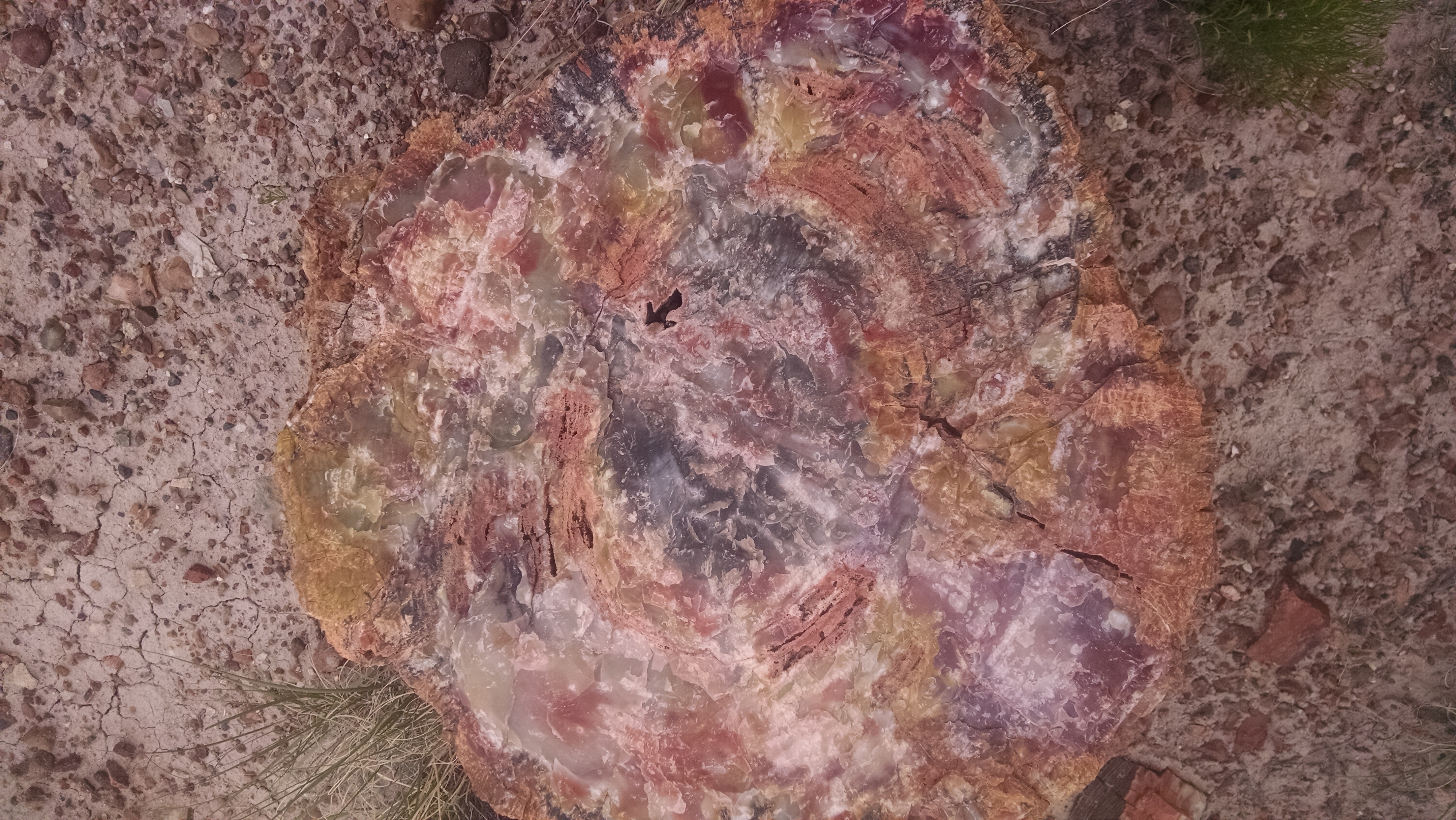
Just one tiny part of the Petrified Forest

Just one tiny part of the Petrified Forest

I was feeling serious rock overkill yesterday. My family has been vacationing in Arizona and New Mexico for over a week, and we’ve seen and hiked through some of the most breathtaking rock formations on the planet: The Grand Canyon, Sedona, Tent Rocks, and various others. So as we drove from Flagstaff to Albuquerque, I almost suggested to my husband that we skip the Petrified Forest. Maybe we needed a day off.

There was also part of me that wanted to get to the hotel in Albuquerque as quickly as possible, so I could find a quiet spot to sit with my laptop. I’ve got two novels currently published and am hoping to send a third manuscript to my wonderful editor in a week or so. Therefore, I was itching to get some work done. Like almost all writers, I’m conscious of book sales, and would like mine to be higher. I’ve also heard plenty of people say that the more books an author has available, the better their overall sales will be. Meaning that the sooner that third book gets published….

Anyway, that’s where my mind was as we pulled up to the Visitor Center at the Petrified Forest. We’ll look at some trees that are now rock, then get back on the road, I thought. But when I actually saw the amazing, colored crystals that had formed inside trees that died and decayed 225 million years ago, I began to view the whole “book sales” issue in a different light.

You see, the Petrified Forest consists of thousands of dead trees that fell into river channels during the Mesozoic Era. Over time, the insides of the trees decayed, but they retained their external structures, and those structures were filled with silica from volcanic ash and dead organisms, which crystalized into various masterpieces of natural artwork.

At first, I was simply stunned by the beauty. But then, I began to think about all the components of those crystals. The plants, the birds, the dinosaurs, who’d unwittingly lent themselves to the spectacle. None of them is individually “famous,” but they’re now blended together in unimaginably gorgeous structures they had no idea they were creating.

And that reminded me of classes I’ve taken over the years about periods of art in history. I recalled how teachers—pressed for time—would focus on the “stars” of various periods: DaVinci, Michangelo, and Raphael during the Renaissance; Monet, Renoir, and Manet during the Impressionist period, etc. But what about all the other artists that teachers seldom have time to focus on? Would those art movements have made the impact they did on society if there hadn’t been hundreds—even thousands—of other people painting in similar styles? Of course not.

Which brings me back to the topic of book sales. Because I honestly don’t know any writer—famous, just starting out, traditionally published, self-published, hybrid published—who doesn’t wish he or she were selling more books. But stepping back and looking at those crystallized trees, I realized that even though many authors won’t become “stars,” we’re all part of something too. And some day—long after we’re gone—people will look back on the books of the twenty-first century and classify them in some way.

So don’t let lagging book sales frustrate you! As you keep writing, try to remember that you’re contributing to a movement, to a period in history. It would be pretty presumptuous to try and figure out exactly how this period will be remembered, but like those creatures whose remains created the wonder of the Petrified Forest, we’re components of something much bigger than we can understand.

Posted in #MondayBlogs, art, natural artwork, writing | Tagged , , , , , , | 12 Comments

Write What You Mean: A Lesson from Ancient Petroglyphs

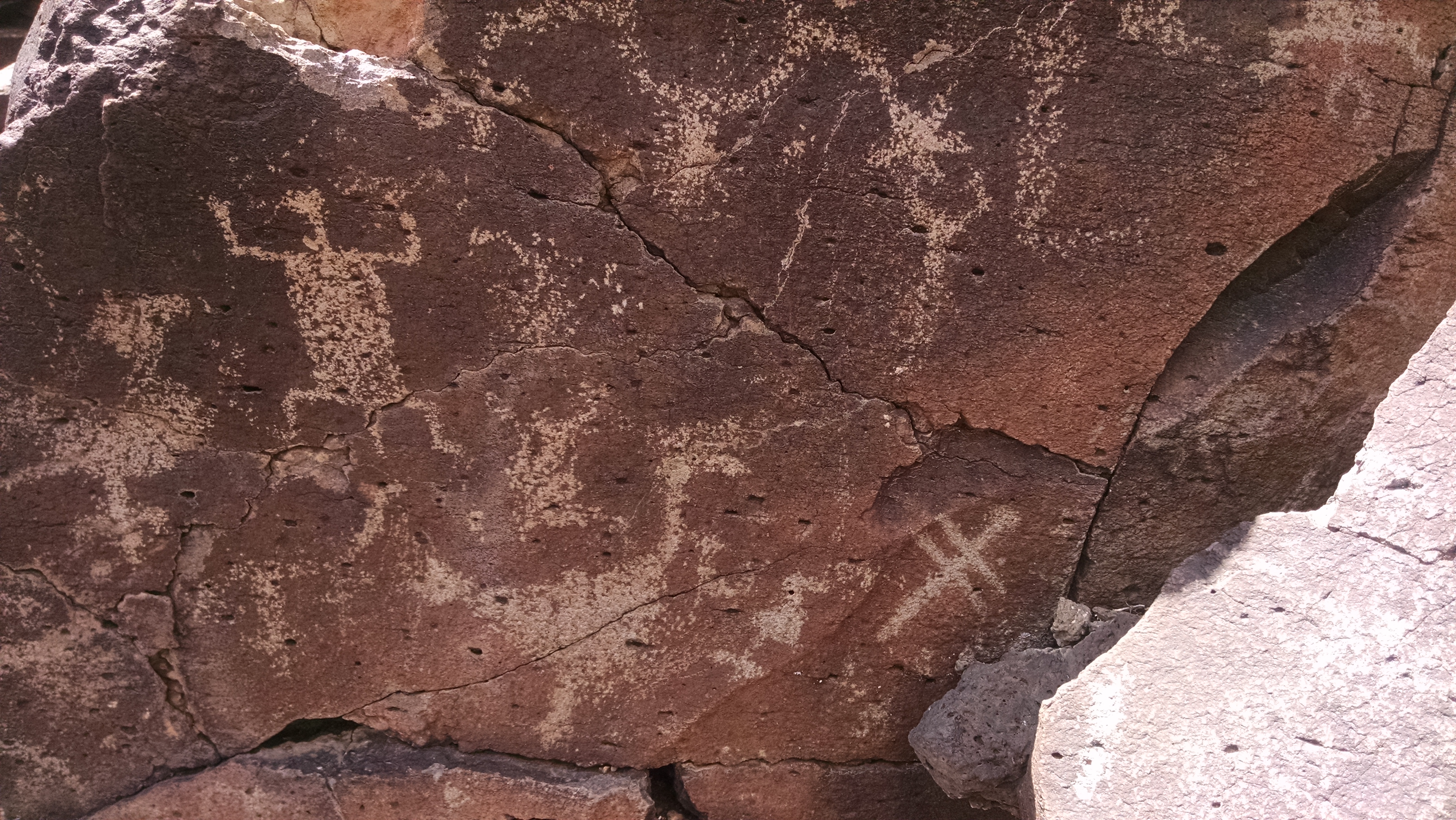
petroglyphs_2

While traveling in the American Southwest the other day, my family went on a guided tour of a rocky park where we were able to view ancient petroglyphs dating to Pueblo tribes from the 1400s. It was an experience I won’t soon forget. If you’ve never seen petroglyphs, I recommend that you try to do so sometime.

My favorite part of viewing them, however, was when I learned from our guide—an archaeologist—that even today, we don’t understand the meanings of these ancient rock drawings. The ones we saw were carved into what is known as desert varnish on basalt, and although some of the images were clearly of animals, others were much more ambiguous. There were spirals, concentric circles, squiggly lines, and other images open to interpretation. Apparently, there are many theories about their meanings, but even the tribe elders, who know more about them than most people, have been ambiguous about what they symbolize.

And yet, these petroglyphs are incredibly beautiful. And they took a very long time to carve into the rocks where they exist. In addition, some of them are in areas that were dangerous to access. Whatever they mean, they were very important to whomever carved them.

I’ve been thinking about that ever since I saw the petroglyphs. As I edit and re-edit my third novel, I’ve been agonizing over word choice and sentence structure, trying not only to get the story right, but to make sure it has meaning to potential readers. And some days, as I rip a chapter apart—trying to get it to sound better, trying to make sure potential readers understand exactly what I’m trying to say—I wonder if I’m overworking it. Maybe it’d be better to just make sure the story works for me.

After all, I have no idea if this new novel will appeal to a wide audience. Certainly, it doesn’t fit into any neat category. It’s a love story without much romance, and a non-graphic story about violence. Also, in many ways, it falls into the genre of women’s fiction, and yet, one of the two main characters is a sixty-year-old male ham radio operator. I guess what I’m saying is that there’s a chance nobody but me will “get” why I wrote it.

But it’s important to me. It’s held my attention for the better part of the last three years. It’s a story I want to write.

Now, in no way would I ever equate this new novel with the breathtaking petroglyphs of New Mexico. But the idea of taking time to create art that means something to the artist and not necessarily everyone else is hitting home with me right now. Which isn’t to say that I don’t think people will enjoy the new novel. Of course, I hope they do! But really, when a writer is at this phase—this stressful place in which he or she is about to hand a manuscript over to an editor—there’s no telling what the reaction will be. However, rather than get my stomach in knots about the possibility of rejection, I’d rather think about those Pueblos who bravely carved their ideas into basalt, knowing that what they had to say meant something to them.

Posted in art, life events, writing | Tagged , , , , , , , , , , | 11 Comments

Tango Music: #MusicTuesday Guest Post by Lisa Fernow

Please welcome the wonderful Lisa Fernow to my blog today. Lisa is the author of a mystery involving tango music, a type of music I know little about. Thanks so much, Lisa for sharing this post. I look forward to reading Dead on her Feet.

———————————————————————————————————-

tango dancersIn writing my tango mystery, Dead on Her Feet, I did a lot of research on the music. My original plan was to include lyrics and audio links so readers could directly experience tango’s heart-wrenching power.

Ultimately it proved too difficult to identify who owned the copyrights.

But here is one of the tangos featured in the book: Miguel Calo’s Que Falta Me Haces performed by Geraldine Rojas and Javier Rodrigues. This tango breaks my heart every time I hear it.

And here’s an excerpt from the beginning of Dead on Her Feet, where I’ve put the lyrics back in for you. This translation of Discepolo’s Uno comes from maestro Alberto Paz.

Our heroine, tango instructor Antonia Blakeley, is introducing her class to tango culture:

“Tango can be about many things – seduction, longing, nostalgia, intimacy, tenderness – you get the picture. Whatever the music and the moment inspires. This song isn’t one we normally dance to but I happen to think it’s a beautiful piece, especially if you understand the words. It’s called Uno. One.” Uno, oh yeah, she thought.

Antonia translated the lyrics from the liner notes:

If I had the heart,

The heart I gave away…

If I could, like yesterday

Love without a premonition…

It’s possible that your eyes

That cry out to me their love,

I’d close them with my kisses…

Without thinking that, like these,

They were other wicked eyes

That ruined my life.

He gave his heart to a woman who betrayed him, and now he can’t love the way he used to. That’s life and death stuff. Tragic, yes? Julio Sosa performs Uno – listen here:

Doesn’t this just make you swoon?

It’s not an accident that Antonia chooses this particular tango, Uno, which is not meant for dancing – a curious choice for the class. But Antonia has walled herself off from love. We eventually learn why.

If this post whets your appetite for more, please visit me at www.lisafernow.com to learn more about tango and share your comments! I can turn you on to other tango music, and I am also happy to recommend great instructors.

PS: the dancer in the image above is Tomás Howlin, a wonderful teacher!

———————————————————————————————————-

About Dead on Her Feet

dead on her feet

For those who dedicate their lives to “chasing the ghost,” searching for that elusive moment of perfect connection on the dance floor, tango is a drug that proves fatal.

When a much-hated member of the Atlanta tango community is stabbed in the middle of a dance, the last thing tango instructor Antonia “Ant” Blakeley wants to do is help the police work out how someone could have struck the fatal blow unseen. Her troubled nephew is first on the list of suspects, and she’ll do anything to protect him.

Unfortunately for her, she’s up against Detective Sam Morrow, a former marine who will do anything to get to the truth. Only one of them will get what they want.

Dead on Her Feet is available in paperback through Amazon.com, Barnes & Noble.com, and through independent booksellers. The e-book was recently selected by Amazon to be republished exclusively under their Amazon Encore imprint.

About Lisa Fernow

Lisa Fernow grew up on the classic mysteries of Ngaio Marsh and Elizabeth Peters. Dead on Her Feet, published by Booktrope, is the first in a planned mystery series set in the tango world. Lisa has danced Argentine tango since 1996, studying with legendary masters Cacho Dante, Susana Miller, Brigitta Winkler, and other inspiring instructors throughout the US.

Posted in #musictuesday, guest blog, guest post | Tagged , , , , , , , , , , , , , , | 9 Comments

From Lawrence

lawrence_house_edited

My first home, Lawrence, MA

Not long ago, I was talking to a group of people, one of whom was a comic who said he likes to begin his standup routine by telling the audience he lives in Lawrence, Massachusetts. He noted that people almost everywhere understand what he means by that, because Lawrence often makes the news for the wrong reasons: crime, corruption, drugs, arson. In other words, saying you live in Lawrence gives you some sort of street cred.

I nodded and smiled. Then, some words fell out of my mouth. “I’m originally from Lawrence,” I said. “I grew up in North Andover, but I lived in Lawrence until I was almost five.” The conversation went on around me, but I sat back, a bit surprised. I’d just told a handful of people I barely knew that my roots were in Lawrence. Most of my closest friends don’t even know that.

You see, my family moved out of my grandfather’s two-family home in that mill city in 1969, a few months before my fifth birthday. My brother was two. It hadn’t been my parents intention to stay in Lawrence even that long–they’d hoped to buy a home in leafier, nearby North Andover right after their marriage–but finances had been tight. By the time we left, most of our neighbors and friends had already bailed out on the city, which seemed to be getting more run-down by the day.

I recall sitting at the dinner table in North Andover one evening–I was probably in third or fourth grade by then–asking my parents where I should tell people I was “from.” Both of them agreed that North Andover was the correct answer. After all, I’d never attended school in Lawrence, and all my close friends were in North Andover. I recall feeling relief. Because despite the fact that Lawrence and North Andover are right next to each other, demographically, they’re quite different. Lawrence is an immigrant city that flourished during the mill era, but has struggled significantly since the 1950s, while North Andover is a suburb that began as a farm town. Call me a snob, but I liked being from North Andover. It sounded so much nicer to me.

My father, on the other hand, loved Lawrence until the day he died. Born and raised there–his dad was the city’s chief probation officer for a number of years–he always maintained that Lawrence would “come back” some day. Sure there was crime, but every city goes through hard times. Its sister city, Lowell, has recently seen tremendous revitalization, and my dad never lost hope that the same thing would happen in Lawrence. Unfortunately, it hasn’t happened yet.

Meanwhile, despite the fact that I lived in North Andover as a child and teenager, I found myself in Lawrence quite frequently. My grandfather and aunt lived there for years after we moved out, and all my dad’s relatives are buried in Lawrence cemeteries. So we’d visit fairly often, for various reasons. And, since North Andover didn’t have any clothing stores when I was young, my friend Laura and I would often take the bus to Essex Street in Lawrence to shop at McCartney’s, Cherry & Webb, and other stores that no longer exist. My orthodontist was in Lawrence, as were my regular dentist, and pediatrician. My first real job was as a telephone operator at the phone company on Canal Street.

But although I was happy to talk about all those things, as I got older–and the city dealt with more violence and corruption–I grew increasingly reluctant to admit that I’d ever lived there. I guess I sort of mentally erased that fact from my history.

So I’m not sure what it was that inspired me to seek out my first home this morning. Certainly, I visit the Merrimack Valley a lot, as my mother lives up that way–as do some friends from high school–but I haven’t been to Lawrence in years. Today, though, my son was participating in a sporting event in Methuen, and after dropping him off, I had a huge urge to see–and show my husband–the residence where I’d lived as a young child. I felt quite confident that I could find it.

We had time to spare, so my husband was game. And although I got a little lost when we were a few blocks away–luckily, we have a GPS–we found the house. It didn’t look great, and the neighborhood looked significantly more downtrodden than I recall it being. Still, the home stood there, clearly occupied, and with a building permit on one of the front doors. I took a chance and walked down the driveway to see if my grandfather’s rose bushes remained, but they were gone, as was his shrine to the Virgin Mary. That made me a little sad, and yet, there was something special about seeing the back yard where I’d played as a toddler. I remembered swinging on my first swing set, while my mom sat on the steps and my grandfather talked to me and tended to his flowers.

Of course, I was trespassing on someone else’s property, so I didn’t stick around. I snapped a quick picture, then got back into the car with my husband. But as we drove away, more memories began to flood my mind: memories of walking those streets with my mom as a kid, stopping into the local butcher shop for meat, and the corner grocery for milk. Occasionally, we’d walk as far as the shoe store that smelled like leather, so I could get my feet measured and maybe get a new pair of shoes.

I didn’t cry or anything like that. Instead, I realized I’ve been denying the truth for decades. I may have grown up in North Andover, but Lawrence is where I spent my formative years. I’m not particularly tough and I don’t have much street cred, but I am, in fact, originally–proudly–from Lawrence.

Posted in growing older, life, life events, memories | Tagged , , , , , , , , , | 6 Comments

The Weird Differences Between Lyrics and Poetry: #MusicTuesday Guest Post by Dane Cobain

Please welcome writer Dane Cobain to my blog today. If you ever thought song lyrics were just poetry set to music, I think you’ll find this post as compelling as I do.

———————————————————————————————————-

daneThe poetry scene is going through a weird time at the moment. A new generation of poets, who were raised on hip-hop and who know that modern poetry is about the performance as much as the written work, is about to break through.

There’s always been a link between lyrics and poetry, since way back in the day when wandering minstrels wandered the land in search of wealthy landowners who’d pay them to perform their art. Whether you look at the written word or the art of performance, there are certainly correlations between the two of them.

As for me, I write both lyrics and poetry, and so I get to observe their relationship up close. It’s certainly true that I follow the same thought processes for both mediums, but there are a lot of differences when you get down to it, too.

For me, poetry is all about the inherent rhythm and sound of the language, and so writing it is almost like using language as a musical instrument. When I perform poetry, it also has a rhythm of its own, and each performance tends to pause in the same places and emphasize the same words, purely because of the way that the words themselves are structured.

With lyrics, of course, there’s a lot more to think about – there’s the melody of the vocal line and the melody of the accompanying guitar, as well as other instruments which will be added later. When it comes to lyrics, the words are slightly less important than when it comes to poetry, which is why the lyrics of bestselling songs are often so terrible.

I also find that whilst the two of them are inextricably linked, they’re not often compatible – it’s incredibly hard for me to set a poem to music because, by their very nature, my poems twist and turn, changing beat and tempo and key. The only way to set that to music would be to write a bespoke piece of music to go with it, and that’s far too difficult for me.

You see, I’m a big fan of the whole Kerouc-style stream of consciousness approach to writing, where you write down the first thing that comes into your head. With lyrics, you have to refine it a little more, you have to tweak words and move bits about to try to get it all to work with the rest of the music. With poetry, you don’t have to hold back so much, and so you can stick with your gut and go with what feels right.

Poetry and lyrics aren’t incompatible, but sometimes it feels that way. Still, with poets and performers like Kate Tempest, Joshua Idehen and Mark Grist paving the way for people, perhaps we’ll see a resurgence of poetry that’s strong enough to unseat hip-hop in the minds of the people.

It’s a long shot, but it’s possible.

———————————————————————————————————-

Dane Cobain is a lyricist and poet from Buckinghamshire in the United Kingdom. When he’s not working on his writing and his website, he’s running his book review blog, SocialBookshelves.com. Dane’s debut novella, No Rest for the Wicked, will be released by Booktrope during the summer of 2015.

Posted in #musictuesday, guest blog, guest post, music | Tagged , , , , , , , , , , , , , , , | 4 Comments

Crazy, Fragile Life

drop of water danist soh

Photo by Danist Soh

On Thursday night, March 19, I had dinner with two dear friends. Friday morning, I took the dog for a run, and got some decent writing done. That evening, I met two other friends for a glass of wine, then had a lovely “date night” dinner with my husband. During those two days, I also got some quality time with my kids, chatted with my mom, and caught up with a few other friends over email and the phone. The long, seemingly relentless, New England winter was finally coming to an end, and things were looking up.

So when I awoke on Saturday morning, March 21, with a stomachache and vomiting, I assumed it was food poisoning or some sort of virus. One more little “storm.” But the pain lingered after the vomiting stopped, and by late Sunday afternoon, it’d really intensified. I told my husband I needed to get to the nearest emergency room.

After doing blood work and an ultrasound, the ER doctors felt extremely confident that the problem was my gall bladder. They admitted me to the hospital, saying I’d have one more test in the morning (a HIDA scan), and if their beliefs were confirmed, the gall bladder would come right out. With some luck, I’d be home Monday night.

Not what I’d expected, but it sounded fairly uncomplicated. Laparoscopic surgery and a brief recovery period. I went to sleep peacefully—protected from pain by medication.

The following morning, however, I was awakened quite early by the surgeon, who examined my belly and told me he wasn’t sure the problem was the gall bladder. In fact, he had a slight suspicion it was my appendix, or maybe something else. “Of course I can’t tell just by pressing on your stomach,” he said, “so let’s see how the test turns out.”

I admit I felt slightly aggravated. I wanted a simple answer and a simple solution.

When the test was complete, several doctors spoke with me, all of whom agreed that the gall bladder was the problem. Late in the afternoon, I was informed by my nurse that she’d soon be getting me ready for gall bladder surgery. At what time? Well, the surgeon was at another hospital, but soon.

My husband and I sat together, talking and joking on the phone with family and friends. Then we were told that the surgeon wanted one more test: this time a CT scan. Just to be sure. I should mention that I was on my third day of not eating (first there’d been the vomiting, then the lack of appetite, then fasting for tests and surgery) and now I’d need to drink barium sulfate and have a scan. Seriously?

“Please trust the surgeon,” said my nurse. “He’s very thorough, but very good.”

Afternoon passed into evening, and the CT scan happened. More waiting. Finally, around nine p.m., the surgeon called, explaining the delay. He said he was so glad he’d ordered the scan, because he could see that my appendix had already ruptured. I was needed in the operating room immediately. Oh, and I’d begun to run a fever.

Everything changed right then. In the OR, the surgeon met somewhat frantically with my husband and me, diagramming in pencil the various procedures he might need to perform, based on what the scan seemed to indicate. I won’t go into detail, but some of the options were quite frightening. The doctor wouldn’t know how bad things were until he could look inside.

Now I’ve had a few surgeries in the past—an ovary removed, several breast lumps, a melanoma on my back—but never have I signed consent papers with the same level of anxiety I felt that time. I guess it’s a good thing I didn’t have much time to worry, because I under anesthesia moments later.

The procedure took almost three hours. When I awoke, I was kept in the recovery room for over six hours because of low blood pressure. I had peritonitis, and would be on strong antibiotics for a couple of weeks. A nasogastric tube was draining poisons from my stomach, and two surgical drains were protruding from my abdomen, pumping out fluid and pus.

The following day, as I sat in bed hungry and draining, the internist from my floor came to meet with me. He said he was so glad the surgeon had insisted on that CT scan, and then said, “I think if you’d gone two more hours, something very bad would’ve happened.”

I cried then, knowing what he meant. As a parent to teenagers, I’m constantly telling my kids they’re not immortal, but hearing someone tell me I’d been that close to the end—and with very little warning—was overwhelming. It still is.

After five nights in the hospital, I’m home now, and feeling much better. I took a little walk in the snow yesterday and let it all sink in. It’s a cliché to say that your perspective shifts after such an event, but it’s also true. Everything—every laugh, every hug, every snowflake—feels a bit more real. I realize I’ll never be able to thank that surgeon enough for what he did–and for his very existence–but I can try to “pay it forward” and be a better person. And yes, I wore big sunglasses, so the people I passed wouldn’t notice the occasional tear rolling down my face.

I was still feeling weepy as I stood on the sidewalk, preparing to cross a busy street. When it looked safe, I stepped into the crosswalk and started walking, but just then, a car came speeding along. Who knows? Maybe the person was texting, or adjusting the radio; in any case, they didn’t see me. I jumped back, and the car continued on its way.

At that moment, I understood that despite the drama of the past week–and despite the fact that my life was spared–it could end just as easily today. Or tomorrow. So I guess all we can do is make the most of our time here. I wish I could say something more profound, but as I sit here typing—and feeling darn grateful for that ability—it’s about the best I can do.

Posted in events, health, life experiences | Tagged , , , , , , , , , | 16 Comments

THE OBOE AND I: #MusicTuesday Guest Post by Judith Works

Today’s post is shared by the wonderful Judith Works, and it’s about a somewhat unusual musical instrument: the oboe. I must admit that I shed a tear at the end, but also thoroughly enjoyed reading it.

———————————————————————————————————-

OLYMPUS DIGITAL CAMERAWhat the heck is an oboe? Well I can tell you: it’s a torture device in the form of a musical instrument. One of the more difficult instruments to learn it was instrumental (pun) in my giving up on ever being a musician.

My mother was musical – both a professional ballet dancer and an expert piano player. A grand piano filled most of our living room. My father was tone deaf and never knew the meaning of the word “rhythm.” He could neither dance nor sing. Unaware of the recent finding that most genes are inherited from one’s father, she was determined that I would follow in her footsteps. When my piano lessons came to an untidy end she pressed on, determined that I play in the grade-school orchestra. I caved in to her demands and joined the class. Shy and wanting to be anywhere else but the music room I awaited the assignment. The only instrument that interested me was the flute. I visualized standing in front of an appreciative audience as I played lovely trills and melodies. Maybe even being interrupted by applause and cheers.

But the flute players had already been selected. They waved their silver tubes in my direction with smirks on their faces. I was handed what looked like a skinny clarinet. It was an oboe the teacher said. The oboe has an almost Oriental sound but my efforts sounded more like the squealing of a pig meeting his end. How school music teachers survive the screeches and wails of aspiring musicians I’ll never know, but they deserve gold medals for patience.

While I had no ability to make a pleasing sound I had no problem at all ruining the reeds. Reeds were expensive and I continually got them caught on my front teeth causing the reed to split and become unusable. But even the problem of reordering (they had to be shipped from New York) didn’t deter my mother. I went through dozens. One time I put a packet in the sleeve of my blouse in case I ruined the one on the instrument and managed to ruin all of them at once when I pulled them out to check if they were still there.

My career in music ended the evening when each student in the orchestra had to play a solo at the annual school music event. I had practiced diligently on Song of India, not the jazz version by Glenn Miller but the original with its high, wavering and mournful melody. As I was endlessly wailing away I caught the conductor’s expression. He signaled for me to quit, first giving me the eye and then resorting to a chopping motion. I finally got the message and stopped in the middle of a phrase with one note hanging in the air over the audience of ever-hopeful parents. After a moment’s pause the surprised and relieved audience began to laugh before they remembered they were supposed to applaud instead. I slunk back to my seat, humiliated. But there was one positive result: I never had to touch the instrument again.

In City of Illusions Laura sees a copy of an ancient flute player in a shop window. The salesman tells her the original was found in the ruins of Pompeii. She begs Jake to buy it after telling him that she got stuck with the oboe when she wanted to play the flute. He reluctantly gets out his wallet, and the statue becomes her talisman in the story. I have such a statue myself and see it every day. It always reminds me of Italy and my ill-fated adventures with the oboe.

——————————————————————————————————-

Judith Works, a graduate of Lewis & Clark Law School, is retired from the United Nations, Rome, Italy. She is the author of a memoir about Rome, Coins in the Fountain, available as an e-book, and City of Illusions, published by Booktrope. She writes travel articles for on-line publications as well as blogging her adventures. Her work has been published in a literary journal. She is currently on the steering committee for the literary conference, Write on the Sound, and is also on the board for Edmonds Center for the Arts and EPIC Group Writers. She is a member of several other writer’s groups.

Posted in #musictuesday, guest blog, guest post, life experiences | Tagged , , , , , , , , , | 1 Comment

Writers and Hollywood Dreams

hollywood

Photo by Florian Klauer

As a writer, I can’t help dreaming about having one—or more—of my novels made into a film. And I know I’m not alone. Just go on the Listopia section of Goodreads and you’ll discover that one of their most popular list is “Books that Should be Made into Movies.” Because let’s face it: almost everyone writing today has been influenced by movie culture, and although many writers are shy and reserved, lots of us have big, glamorous dreams. Imagine being asked by a movie director what actors you envision playing your characters. Your characters: those people conceived in your mind, growing to larger-than-life proportions and commanding silver screens across the country—maybe even around the world.

Therefore, a few years ago, when I heard that director David O. Russell was filming a major motion picture in the Boston area, and that a local casting company was seeking extras to do background work, I jumped at the opportunity. Not only was I star struck—I’d heard through the grapevine that some of the film’s stars included Bradley Cooper, Amy Adams, Jennifer Lawrence, and Christian Bale—but I also secretly hoped I might be able to slip a copy of my recently self-published book (Living by Ear, which is now published by Booktrope Editions) into Mr. Russell’s hands. After all, I could totally see Amy Adams playing the role of my protagonist, Boston musician-turned-frustrated-housewife Christine Daley. And wouldn’t Christian Bale be perfect as Chris’s gorgeous, talented, long-lost lover, Curt. So I filled out the forms on the casting company’s website and had my daughter take some head shots. I didn’t expect anything to happen—as I had zero acting experience—but the opportunity was irresistible.

So imagine my surprise when I got the call! The timing was especially interesting, as I was at a local animal shelter, adopting a dog. Our family had wanted a dog for years, and then—just as we were finalizing our decision to take Spencer home—my cellphone rang and it was a casting director. Could I go in for a fitting the following day, then be on set for two days the following week? I wasn’t sure what to say, but my amazing husband told me to go for it. He said he’d work from home on the days I’d be busy, and would make sure the kids and new dog got the help and attention they required. I was so excited. As I got ready to go to work on my first day, I made sure I had a copy of Living by Ear in my purse.

So what happened? Well, as you might’ve deduced, the film was American Hustle, and as an extra, one of the first things I did was sign an agreement, stating that under no circumstances would I fraternize with, or speak to the stars or the director. Any violation of that rule would result in instant ejection from the set. So much for slipping Mr. O’Russell a copy of my novel.

I will say, however, that I was very lucky, because on the days I was selected to be on set, most of the major actors were there as well. In fact, there was one scene—most of which ended up on the cutting room floor—in which I got to spend several hours in close proximity to Mr. Cooper, Mr. Bale, Ms. Adams, Ms. Lawrence, and a few other A-listers. That was extremely surreal, and a memory I’m sure I’ll carry with me forever.

As for the work? Well, first of all, I learned that acting—even as an extra with no lines at all—is difficult physical work. I’m sure you’ve heard that said before and perhaps have your doubts, but it really is. And I’m a pretty active person. I jog a couple of miles every day; I keep the house clean; I do the laundry; I walk the dog; I handle most of the food shopping and all the cooking in our house; I run errands; I transport the kids to their various weekend and after-school activities. Oh, and I write books too. But after two twelve-hour days on the film set—in three-inch spike heels, no less—I could barely move, let alone think. I have no idea how other parents manage to do that type of work, but plenty of my coworkers during those two days—both famous and non-famous—were parents.

I also got the tiniest sense of the psychological challenges film actors must face every day. After all, movies are all about projecting images, which—by nature—aren’t real. So all day long, an actor is required to be someone he or she isn’t. Not to mention that there are seemingly endless touchups to hair and makeup, hundreds of wardrobe adjustments, and ultimately thousands of attempts to make everything look and sound perfect. And then, after the final cut of the day, the actor walks out the door, and goes back to his or her normal life. Again, this may seem pretty obvious, but in my case, after spending twelve or more hours in evening wear—with a glamorous hairstyle and makeup, surrounded by Hollywood A-listers—it felt extremely strange to change into jeans, get on the T, and return home in time to get the dog out for a late-night walk.

In any case, I was quite grateful for the experience, which taught me a lot and altered my perspective for several days. In some ways, being an extra in a movie is like taking a brief vacation from your actual life. You become immersed in a world that exists only to the other people on the set. For example, the American Hustle scenes I was in were filmed in Boston’s Wang Center, but I don’t think anyone walking by the building would’ve suspected that much of anything was going on inside.

But indoors? The various backstage rooms, corridors, and staircases of the beautiful old theater had been temporarily transformed into beauty salons, eating areas, holding areas, and dressing rooms. And, because all the extras were required to wait in line for at least an hour each day to have their hair and makeup done, I got to meet so many interesting people! I also think the nature of extra—or background—work encourages an immediate openness between peers that you don’t find in most other industries. Everyone’s aware that the world they’re currently immersed in isn’t going to last much longer, so why not enjoy the time and have some really good, intense conversations?

Would I do it again? Absolutely. I keep my name on the casting company’s mailing list, and whenever I get a request for availability, I check my calendar and let them know if I’m a potential candidate for work. So far, I haven’t gotten called for another film, but I’m keeping my fingers crossed.

On the other hand, I have no more illusions about slipping a director one of my books! I think there’s a better chance of a filmmaker finding one of my novels on Amazon or stumbling across my blog! Not only are extras not allowed to speak to the director, but purses and other personal items—including cellphones—are strictly forbidden on set.

Oh, and did I get on the screen in American Hustle? Um…yes, you could say that. Of course I ran out to see the movie as soon as it was released, and was disappointed to find how many of the scenes I was (remotely) involved in didn’t make the final cut. However, there’s a part of the movie when Jeremy Renner (as Carmine Polito) makes a speech about never giving up. If you look at the clip below and pay special attention to the lower left section of the screen from about 0.41 to 0.47–and don’t blink!–you might notice a tall,blond woman in a pale green dress dancing with a white-haired man. That’s me!

Posted in events, film, films, life experiences, living by ear, movie, Uncategorized, writing | Tagged , , , , , , , , , , | 15 Comments