
Photo by Luke Chesser
Recently, I did a book talk at a local senior center. Their book club had read Living by Ear, and they’d invited me to visit.
Now, since both of my books feature characters who love music—particularly music by artists known for their poetic lyrics (Bob Dylan, Lucinda Williams, Bruce Springsteen, Elvis Costello, David Bowie, etc.)—I fully expected music to be part of the discussion. Usually when I meet with book groups, people like to talk about the musical artists and bands that have influenced their lives. But no matter what style of music they enjoy—be it rock, pop, country, R&B, or standards—the discussion usually focuses on lyrics, and the messages in the songs.
At this recent meeting, however, one woman raised her hand and stated that she believes the era of popular lyric-driven music has ended, at least for the Millennial generation. She pointed out that much of the music that teenagers and college-age people listen to today is focused primarily on rhythm, beat, and repetition of words or phrases, rather than traditional lyrics.
People in the room began to nod. “Yes,” said another woman. “My granddaughter said she doesn’t care about the words to the songs on the radio. She just wants something to dance to.”
“It’s sad,” said someone else. “Music used to have meaning.” The nodding increased.
Then the woman who’d made the original statement raised her hand again. “And there’s a good reason for this,” she said. “The world is so complicated and frightening these days that kids need a strong rhythm to calm them. It’s like being in a rocking chair. The beat comforts them.”
I considered that. Sure, past generations have had to deal with wars, global disease, famine, tragedy, and crisis. But none of it was in their faces the way it is today. When I was growing up, adults worried about children seeing the Vietnam War on TV, but our kids can see far more graphic violence right on their cell phones. They also get news of world events immediately because it shows up in the newsfeed on their phones; there’s no distance for them, no perspective at all. And although many of us know people who’ve been killed or seriously damaged in wars like Vietnam, Iraq and Afghanistan, it wasn’t until 9/11 that most Americans worried about terrorism on our own soil.
Could that be why my teenage daughter—an intelligent girl—is such a huge pop fan? Every time we get in the car together, she’ll immediately switch the radio from my station (I’m partial to Sirius XMU) to one of the pop stations. Of course, we argue about music all the time—good naturedly—and she freely admits that the lyrics of most pop songs are silly, unintelligible, highly sexual, or all three. But she doesn’t care. (Not up on the current pop scene? Check out “Bang Bang,” which is at number four on American Top 40 this week.)
“Wow,” I said to the woman at the senior center. “I’ve never thought about it that way.” Do Millennials listen to crap because they need it for comfort? Are they so worried about ISIS, Ebola, terrorist attacks, and all the other scary things in the news that they require a driving beat to calm them down? Is the pop music I criticize so often, in fact, a mechanism for staying sane?
Another woman raised her hand. “I don’t think we’re giving our young people enough credit,” she said. “We sound like a bunch of old ladies.” She went on to point out how her parents and grandparents slammed the music of her youth (the Beatles and Rolling Stones), which is now considered classic and genius. She also noted that although she doesn’t necessarily enjoy the rap music her grandson listens to, she knows he listens to it for the words and messages. “I don’t like some of the messages in rap,” she admitted, “but I don’t think it’s fair to say kids don’t care about words any more.”
At that moment, Ed Sheeran popped into my mind. I consider Ed to be pretty brilliant, and he manages to get played a lot on pop radio, despite the fact that he’s a true singer-songwriter. And come to think of it, my daughter always sings along with him. So maybe there is hope for popular music with inspired lyrics. And maybe—just maybe—the party music craze will run its course and the pendulum will swing back the other way.
What do you think? Are lyrics dead in the world of pop music, or will singer-songwriters begin to gain ground again? Can Ed Sheeran lead a revolution, or will he remain an anomaly on the American Top 40? I’d love to hear your thoughts.

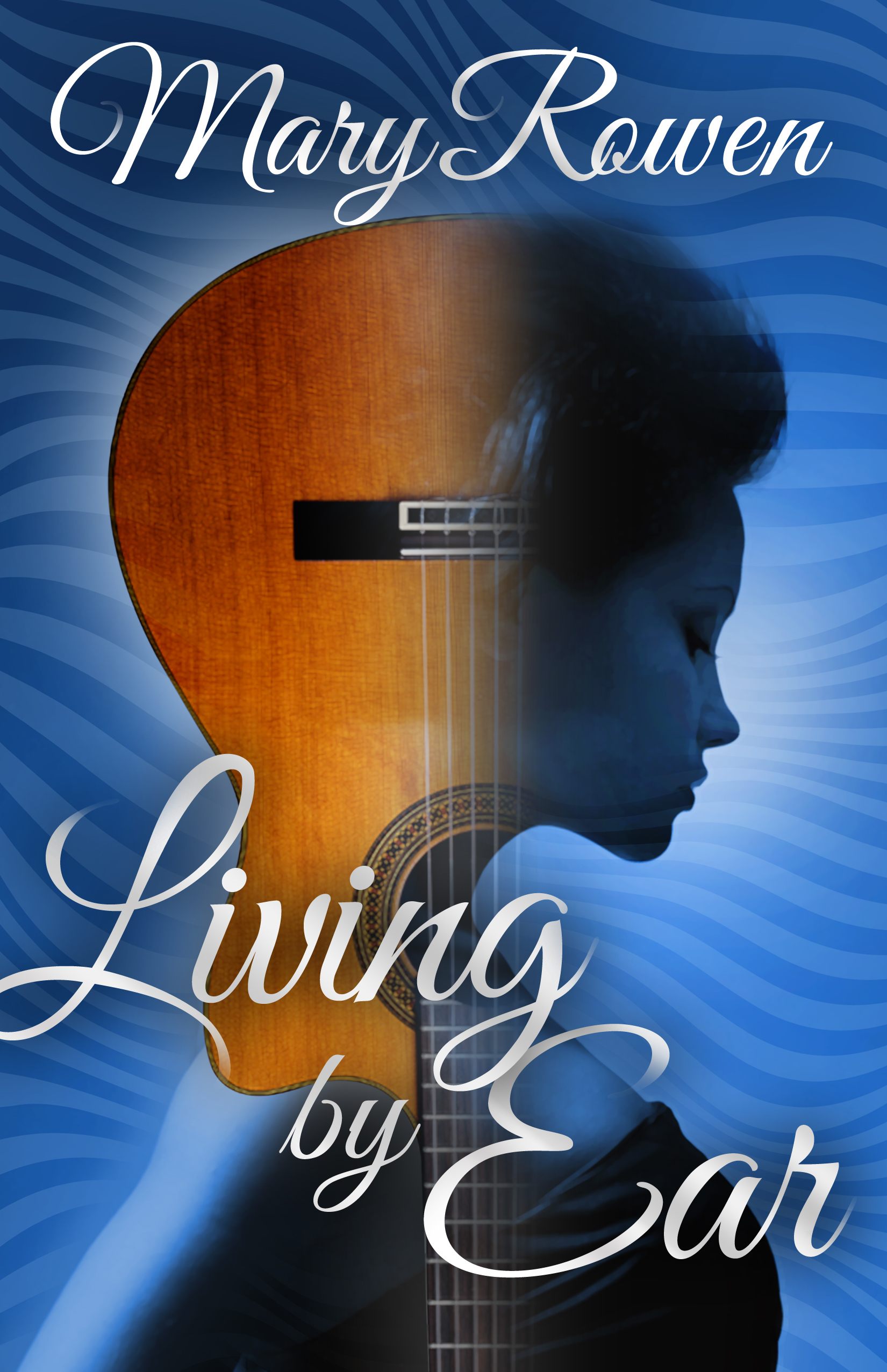 I’m so grateful to Emma at Writer in a Wheelchair for her wonderful review of Living by Ear. It’s so nice that I don’t even want to post an excerpt, but you can read the entire review here.




 MaryRowen.com